

Selling a business often looks straightforward from the outside, yet decisions made long before any buyer appears shape the outcome. When owners lack clarity or act too late, they can lose leverage, accept weaker terms, or exit with results that fall short of expectations.
If you are thinking about how to sell your business successfully, the most important work happens before valuations, buyers, or deal structures enter the picture, because early decisions determine whether selling delivers control and value or leads to compromise and regret.
Why do business owners decide to sell in the first place?
Many business owners decide to sell because they want relief from pressure and long hours, driven by constant decision-making and the sense that the business depends too heavily on them. Others feel motivated by a life change, a new opportunity, or the sense that they have taken the business as far as they can.
Selling to escape exhaustion leads to different choices from selling with a clear value objective. Without clarity here, owners often rush into a sale that solves the wrong problem and creates new ones.
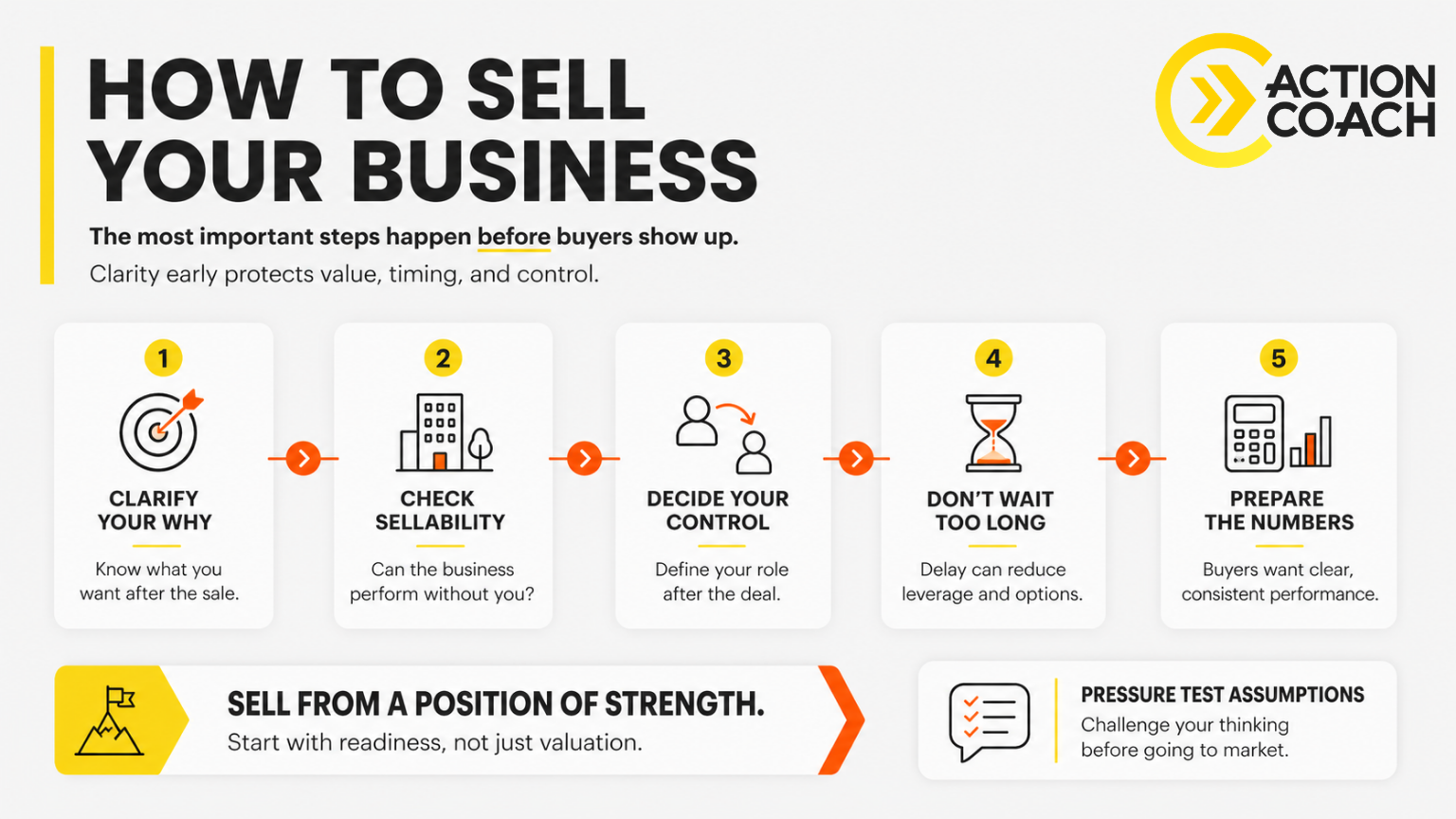
Before exploring how to sell your business on your terms, it is worth being honest about what you want life to look like after the sale and what you want from the transaction. Understanding how business coaching works can help turn that reflection into clear, practical decisions.
If you are early in thinking about selling, this is the point where stepping back and pressure-testing your personal goals can prevent costly missteps later.
Is my business actually sellable, or just profitable for me?
A business can be profitable and still unattractive to buyers when performance relies heavily on the owner. Buyers look for businesses that perform without the owner making every decision or holding key relationships, even when routine issues arise.
Many owners confront this distinction when buyers begin asking who runs the business day to day and what happens when the owner steps back. By that stage, owners have already lost leverage. The question to ask early is not “can my business make money?” but “can it keep making money without me?”
What works well for you daily may be exactly what makes the business risky from a buyer’s perspective.
How much control do business owners usually give up when they sell?
Many business sales involve a gradual transfer of control, with responsibility shifting over time instead of ending on completion day. Earn-outs and phased exits feature in some deals, as do retained shares or ongoing roles, especially in owner-led companies. Yet many owners only consider these realities after they agree to sell.
The decision is not just financial. It is about identity and authority, alongside tolerance for shared control. Some owners are comfortable stepping back gradually. Others find even short-term loss of control deeply frustrating.
Understanding your position early avoids resentment later. When thinking through how to sell your business without losing control, clarity on post-sale involvement protects both value and well-being.
If you are weighing up a future sale but are unsure which decisions matter most right now, a structured conversation can help you test assumptions, explore options, and decide your next move with confidence. You can start with 2 weeks of free coaching to see how this support works in practice or have a conversation with an experienced business coach.
What happens if I wait too long to sell my business?
Waiting to sell often feels safe, yet it can reduce leverage and future outcomes. Markets change, and energy levels drop. Key people leave. Holding out for a better outcome can narrow future options.
Owners need to understand the cost of waiting. For some businesses, time allows value to grow. For others, it increases dependency on the owner or exposes structural weaknesses.
A disciplined decision weighs what improves and what deteriorates over time. Asking how to sell your business at the right time without examining the consequences of delay leaves owners reacting instead of choosing.
What numbers do buyers actually care about when buying a business?
Buyers look beyond management-level figures and focus on whether the numbers explain risk, sustainability, and future performance clearly enough to support decisions.
The figures need to reflect how the business operates in practice and how predictable future earnings are, without relying on cosmetic adjustments or aggressive forecasts.
When owners first look into how to sell their business, many assume profitability alone is enough. In reality, clarity and consistency matter just as much as headline figures. For examples of business owners who gained greater clarity and structural improvement through coaching, see our success stories.
Who should challenge my assumptions before I try to sell my business?
Owners often rely on familiar advisers, but that rarely surfaces the assumptions buyers are most likely to test. Accountants, solicitors, and brokers each play a role, but they are often involved once decisions have already been made.
What is often missing is someone who challenges assumptions early and forces difficult questions that help owners see the business as a buyer would.
When exploring how to sell your business, the quality of thinking before the process begins often determines control or compromise.
Is there a right way to sell a business, or does it depend on the owner?
Understanding how to sell your business starts with understanding yourself as an owner, not just your business as an asset. Owners improve their chances of a strong outcome when they slow down early, make deliberate decisions, and prepare well before the market forces their hand.
If selling is on your horizon, the most valuable step is not finding a buyer but gaining clarity on timing, control, and readiness. Speaking with an experienced business coach can help you evaluate these decisions early and approach any future sale from a position of strength.
